



The President of the People's Republic of China, Xi Jinping, made his first European tour in 2019. A tour that included several countries from the then 17+1 group.1, including Greece, Serbia, and Hungary. As is customary in Chinese foreign policy, every step is part of a meticulously thought-out strategy. This trip was no exception; it was part of meticulous planning within the framework of the still nascent Belt and Road Initiative (BRI). In Europe, the initiative was perceived with equal parts caution and complacency. This was reflected in its EU-China Strategic Outlook2 (2019), in which it qualified China as a key global actor and a leading technological power whose presence in the world should be accompanied by greater responsibilities in the world order, as well as greater reciprocity and greater openness of its system3.
Facing a world order marked by factors such as the unpredictability of the Trump administration or Brexit, it was complex for European institutions and governments to justify to European citizens a rejection of foreign investment in critical infrastructure, industry, and connectivity. The entry of Chinese capital, channeled through the yuan, was perceived as an opportunity. However, neither those same institutions nor public opinion were fully aware that this investment, in practice, implied the opening of an influence channel through which China would begin to strengthen its presence in Europe. This was a strategy that would concentrate, over the following years, on one of the regions traditionally least integrated into European economic and power dynamics: Central Europe.
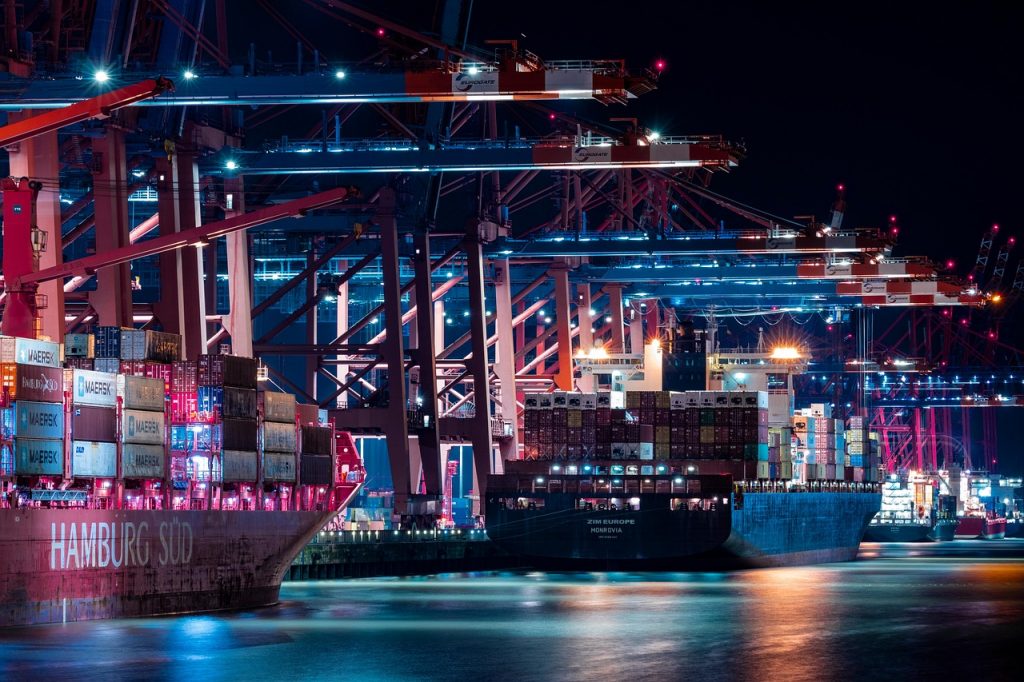
In this sense, ports have become a double-edged sword for China. On one hand, they project a legitimate interest in international maritime trade; on the other, they act as a Trojan horse to enter European areas where its economic influence has historically been permeable. Ultimately, port investment is a way to consolidate China's presence where its economic footprint has until recently been marginal.
China's growing influence in European territory, primarily through the supply of critical raw materials and investments in strategic infrastructure and industries, raises urgent questions for the European Union's sovereignty and autonomy regarding economic reciprocity, dependence, and geopolitical balance. These challenges have been at the center of the debate during the EU-China Summit held in July 2025 in Beijing, where the Union had the opportunity to defend a firm stance in redefining the terms of a relationship that, without detracting from others such as the transatlantic one, will shape the course of the international order in the coming years.
One of the most talked-about examples of strategic port investments for the expansion of Chinese influence is the port of Piraeus in southwestern Greece, the flagship of the Mediterranean in this Chinese geopolitical strategy.
Designed by the Greek architect Hippodamus in the 5th century BC, and located just ten kilometers from Athens, this port has historically been coveted by quite a few powers, as it serves as a crossroads between a good portion of European, African, and Asian trade routes.
Although in classical Greece it was one of the most famous meeting points, its activity was devastating with the 2008 economic crisis and Greece's considerable debt, severely diminishing its international influence. In the same year, the port reached its historic low in commercial activity with just 433,500 TEU containers.4, well below pre-crisis levels where the record was over a million containers.
It wasn't until October 2009 that the waters of Piraeus began to ripple again, this time with the arrival of the giant shipping investor COSCO (China Ocean Shipping Company). Beijing knew how to seize the opportunity and, following the visit to the port by then-Chinese President Hu Jintao, signed a contract ratifying the Greek concession for 35 years of management of two of its terminals.5 Today, this translates to Chinese ownership of 67%6 of Piraeus port actions and revenues of up to 220 million euros7 in 2023. However, this apparent financial success contrasts with the claims of the Greek authorities, who publicly denounce the apparent deterioration of the port due to maritime traffic saturation, mooring conditions, shortage of boarding gates, and the infrastructure itself, which seems to fall short of the Chinese standards promised almost two decades ago.
It is precisely the lack of sustained, long-term structural investments and the focus on mere operational control of the port that lead to questioning China's true interest in this enclave. Everything suggests that the Chinese objective was not to revitalize the port as such, but to instrumentalize it. In this way, Piraeus appears to have ceased to be an end in itself to become a stepping stone: from the Greek enclave, China has articulated land connections that allow it to penetrate the Balkans and Central Europe with some diligence. This logic fits perfectly within the framework of the Belt and Road Initiative (BRI), aiming to create China-controlled economic corridors in strategic areas of the world.
More than a mere economic investment, the majority control of the Port of Piraeus should be understood as a strategic move of a pawn in a game China is winning. A move with which it seeks to dominate global supply chains and strengthen its presence across the globe, maximizing its radius of influence.
Thus, from Piraeus, Chinese merchandise (electric vehicles, solar panels, batteries, etc.) finds its way to Central Europe via rail infrastructure such as the Piraeus-Thessaloniki-Skopje-Belgrade-Budapest corridor, driven by Chinese investments in Serbia and Hungary. Traditionally aligned with the Beijing regime, these countries have, however, witnessed recent social tensions and citizen protests, questioning the tolerable degree of economic and political dependence that comes with Chinese capital. Thanks to connection lines like the one mentioned, Chinese merchandise docking at the Greek port can reach, for example, Budapest in a much faster journey than other maritime alternatives through Northern Europe offer. It should also not be overlooked that this route provides access to major secondary logistics hubs in allied countries receptive to Chinese investment, such as the intermodal center in Zalaegerszeg, Hungary.
Once in Central Europe, logistical branches open up to other enclaves such as Warsaw, Bratislava, or Bavaria, achieving the distribution of Chinese products in the main European economic areas, with the competition that this entails for European industries.
Although China's advance in the Balkans has captured a significant amount of media and geostrategic attention in recent years, the region does not exclusively enjoy Chinese influence. International institutions such as the World Bank have also intensified their presence in this space, aware of its geopolitical relevance and the risk that would arise from leaving a vacuum that other actors are willing to fill.
The fundamental differences between the two models, that of the World Bank based on the strictest conditionality and that of China based on strategic pragmatism and opacity, are key to understanding how certain European locations have become a space for discreet global trade competition today.
A representative example of Western contribution to the development of Balkan infrastructure is the ‘Western Balkans Trade and Transport Facilitation’ project, under the financial framework of the International Bank for Reconstruction and Development (IBRD), an institution that is part of the World Bank.
The project itself is intended to partially finance, for a total of $90 million8 for the period 2019-2025,9 the development and improvement of infrastructure and strategic consulting services for commercial purposes. Some of the main objectives are to facilitate cross-border trade, modernize existing infrastructures and create new ones, strengthen electronic customs management systems, and acquire inter- and intra-regional coordination equipment. This particular program only includes Albania, North Macedonia, and Serbia, with approximately $30 million in loans respectively. However, this does not mean that the rest of the Balkan countries are exempt from World Bank financing. Similar projects of this type have been approved in subsequent years and are equally aimed at financing infrastructure development in the Balkan region. All of this is despite recent U.S. criticism of the institution at its spring meeting in Washington to “return to its founding mandates.”.10
These types of projects, less visible and less publicized, offer a counterpoint to China's investment model. They demonstrate that strategically located countries are a focus of interest for both major powers—like China—and major multilateral actors. In contrast to China's forceful investments, the World Bank's model provides less immediate development and comes with greater conditionality, but it is more sustainable and, in any case, always linked to democratic principles and transparent procedures supported by international trade rules.
As previously mentioned, the EU-China Summit was held in Beijing on July 25th. The reason was none other than the 50th anniversary of diplomatic relations between the European Union and the People's Republic of China. Sanctions on MEPs were lifted,11 The waters don't seem to have calmed down too much.
In her speech during the July plenary session at the European Parliament in Strasbourg, the current President of the European Commission, the highest authority representing the Union alongside António Costa during the Summit, clearly outlined her three priorities for the meeting: rebalancing economic relations with China through balanced access between both markets.“rebalancing”; mitigate strategic risks by diversifying suppliers, but without neglecting ties with China “derisking, not decoupling”and reconfigure diplomatic relations, defending an international order based on equally respected norms“advancing diplomacy”.12
The European institutional stance appears to be clear; the big question is whether Europe will be able to speak with a single voice, and avoid a chorus of discordant voices, as the then head of the European External Action Service, Josep Borrell, alluded to in 2023 when discussing European relations with China. This is because if anything has highlighted China's growing influence on the continent, it is the heterogeneity of interests among member states.
While Germany shows apprehension about cooling relations with its main trading partner, others like Greece and Hungary have received considerable investments, at least enough to positively condition their foreign policy towards the Asian giant. And for their part, the Balkans that are not part of the European Union see China as the economic injection they do not receive from European funds, which ends up straining the geopolitical cable.
In this fragmented puzzle, the unity of its pieces is tested with every investment, every visit, and every purchase that China makes on European soil. The attitude towards China has therefore become an exercise in balancing economic pragmatism, security of supply, respect for Western principles, and European strategic autonomy. Any strategy by Europe, or its member states, that ignores these issues is doomed to fail.
China's influence in the European Union, materialized -among other ways- in strategic investments in ports, infrastructure, and logistics corridors, constitutes one of the main challenges European institutions must face over the next decade. Far from being a mere commercial operation, Beijing seeks to strengthen its presence in the European industrial and economic heartland.
The case of Piraeus port exemplifies how a port investment can become a lever for strategic projection from which to articulate corridors towards the center of Europe. This is a model that, in turn, contrasts with the institutional and transparent approach implemented by organizations such as the World Bank.
With the upcoming EU-China Summit in July 2025, the commemoration of fifty years of diplomatic relations cannot be limited to a mere international event or a historical review. The European Union has a unique opportunity to define and implement its diplomatic and geopolitical role on this stage.
quotes
‘17+1’ is a grouping of countries that serves as a form of cooperation between China (1) and a series of European countries (17). It is a diplomatic initiative conceived by Beijing in 2012 within the framework of the Belt and Road Initiative.
3 Same
It should be noted that the European Commission concluded in 2015 that the tax benefits granted by the Greek State to COSCO constituted State aid incompatible with the Treaty on the Functioning of the EU concerning the legal framework of the internal market. After ordering the recovery of this aid, Greece appealed the decision before the General Court of the EU, which in 2017 ruled against the appeal, upholding the illegality of the aid to the Chinese shipping company. The operational management of the port through COSCO remained within European legal parameters, and that is why it continues to this day.
7 Idem. p. 87.
11 Imposed since 2021 in response to previous European sanctions retaliating against the repression of the Uyghur minority in Xinjiang.