






In recent months, Washington has consolidated a new global power architecture, understood as a state's structural capacity to project its influence beyond its borders and shape the rules, incentives, and expectations of the international order. From a regional perspective, the traditional anti-drug trafficking doctrine has evolved into a strategic competition for key geopolitical spaces such as Greenland or the Panama Canal. The United States thus adopts a strategy of open confrontation, based on the defense of exclusive interests and a logic of deterrence.1 expansive.
Classical Realpolitik pursued stability through the balance of power. However, the modern version, dubbed Realpolitik 2.0, introduces additional dimensions: economic nationalism, technological instrumentalization, and a hierarchical management of spheres of influence. Within a developing multipolar framework, where the unipolar hegemony of the United States is beginning to show tensions and limitations that question its ability to sustain the international order it helped to build, this strategy represents an effort to shape global control through economic and technological instruments..2 Then an essential question arises: does this new doctrine represent pragmatic realism or an illusion of order in an increasingly fragmented system?
Classical Realpolitik
Realpolitik is founded on three essential pillars: the calculation of power, the primacy of national interests, and morally neutral pragmatism. This logic, which according to Kissinger reduces relations between states to the pure correlation of forces,3 justifies a dynamic and adaptable diplomacy, guided by convenience rather than ethics. Geopolitical stability thus becomes a result of pragmatic strategies aimed at preserving national interests.
Its golden age is concentrated in the 19th century, during the era of Bismarck, who defined foreign policy as the art of the possible.4a balance based on flexible alliances and the absence of universal ideals.5 During the Cold War, Nixon and Kissinger expanded this approach on a global scale, framing U.S. foreign policy within a logic of power balancing rather than ideological alignment. The diplomatic opening to China in 1972 clearly exemplifies this internationalized Realpolitik: far from being the result of an affinity of values, the rapprochement with Beijing responded to a specific strategic calculation, aimed at reconfiguring the balance of power against the Soviet Union and managing an international system undergoing profound transformation. In this context, the bipolar confrontation did not extinguish but was reconfigured within a logic of instrumental negotiation, where adversaries could become useful interlocutors as long as it benefited the structural interests of states.
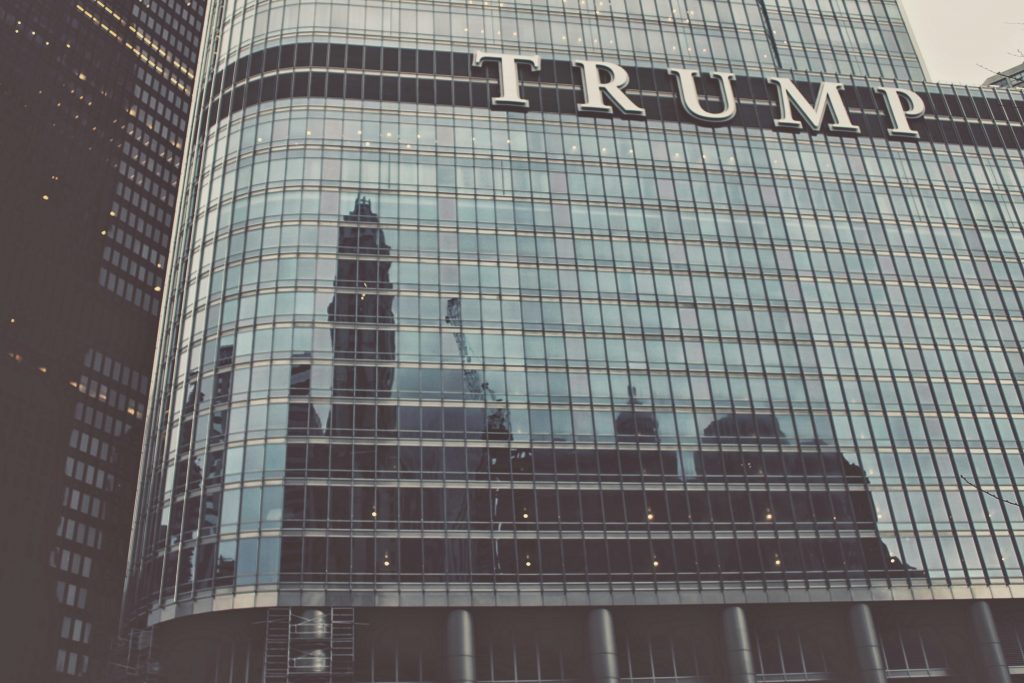
In the 21st century, the Trump administration I (2017–2021) revived this logic with the America First doctrine, substituting multilateral alliances for transactional bilateral agreements that prioritize immediate advantages over normative commitments. The withdrawal from the Trans-Pacific Partnership in January 2017 and from the Paris Agreement six months later marked a turning point in US foreign policy: Washington began to dismantle multilateral structures to replace them with bilateral negotiations in which its leverage was greater.
This reconfiguration was clearly manifested in the renegotiation of the North American Free Trade Agreement, transformed into the USMCA, whose provisions on digital trade and intellectual property respond less to a regional consensus than to the structural interests of U.S. corporate actors.6.
International institutions were relegated to spaces of conditional negotiation—the systematic blockage of the WTO Appellate Body between 2017 and 2020 paralyzed multilateral trade arbitration.7 This change marked the transition towards a Realpolitik 2.0, where technology, data flows, and markets emerge as instruments of raw power that dispense with institutional mediation. The extraterritorial restriction implemented against Huawei in 2019, materialized through unilateral sanctions and direct pressure on European allies to exclude the Chinese corporation from their 5G networks, illustrates this new techno-economic coercion. U.S. dominance over semiconductors and technological standards was used to fragment global value chains without the need for intervention from multilateral entities.8
Trump II: The Laboratory of Realpolitik 2.0
Following his reelection in 2025, Donald Trump reinforced this trend through an intensified version of nationalist Realpolitik. During the first months of his term, he signed more than 70 executive orders on trade, immigration, and national security, systematically relying on this legal instrument to circumvent the delays and resistance inherent in the legislative process. This concentration of executive action followed a logic of selective deregulation: dismantling those institutional mechanisms—regulatory agencies, multilateral agreements, domestic regulatory frameworks—perceived as constraints on the executive branch’s ability to maneuver and on the interests it sought to protect. From an economic perspective, Realpolitik 2.0 redefines allied interdependencies under a paradigm of extreme protectionism: a 60% increase in tariffs on imports from China, trade pressure on Canada and the European Union, as well as the use of trade as a coercive instrument.9
The technological dimension occupies an increasingly central place in the reconfiguration of the international order. Restrictions imposed on TikTok and various Chinese artificial intelligence applications are not solely due to immediate security concerns, but express a desire to control data flows, algorithmic standards, and the digital infrastructures that structure contemporary strategic competition. Alliances with India and Israel in cybersecurity reinforce this logic, revealing a trend towards building geopolitically aligned technological blocs where innovation in artificial intelligence, quantum computing, and fifth-generation networks ceases to be a shared good and becomes a strategic resource that redefines the very terms of global competition.
In foreign policy, the US strategy is becoming more aggressive. Intervention in Venezuela, a renewed inclination towards Greenland, and the contention for the Panama Canal are based on a logic of regional control linked to Monroe Doctrine 2.0 (Donroe Doctrine): a reinterpretation of the 19th-century principle that, in its original formulation, sought to preserve the autonomy of the Western Hemisphere against external interference. However, in its contemporary application, it appears to be geared towards limiting Chinese presence in the region through preferential control of strategic resources and trade routes, raising questions about the distinction between regional protection and hegemonic influence.10 The term «Donroe» captures the transactional turn of this doctrine, where regional supremacy is no longer justified by Pan-Americanism but by direct geoeconomic interests. In parallel, new bilateral alliances or transactional axes are emerging—such as the rapprochement between Saudi Arabia and Iran under US mediation or the strengthening of QUAD 2.0 against China—which are reconfiguring the power map.11
Migration and border security issues, previously marginal in traditional Realpolitik, are now taking center stage. The expansion of ICE, the construction of walls, and the militarization of border control symbolize a policy of hemispheric closure that seeks to reaffirm U.S. sovereignty in its immediate surroundings. This set of strategies produces immediate results, as well as profound contradictions: European diplomatic isolation, increased anti-American sentiment in Latin America, and the risk of partial disintegration of the liberal order.
Regional consequences
In the Americas, contemporary geopolitical pragmatism has led to an explicit revival of the Monroe Doctrine, through threats and sanctions against governments that do not align with Washington’s foreign policy. Mexico faces the recurring threat of 25% tariffs contingent on its cooperation on immigration issues.12. Panama faces pressure regarding Canal sovereignty due to Chinese investments in port infrastructure. Greenland is emerging as a geostrategic target due to its rare earth deposits and Arctic position. Colombia and Cuba remain under sanctioning schemes that function as instruments of regional disciplining. This policy reaffirms the pursuit of unilateral hemispheric hegemony that bypasses institutions like the OAS, but at the cost of deepening regional fragmentation and resistance: trade between Latin America and China surpassed five hundred billion in 2023.,13 revealing the paradox that American coercion precisely accelerates the strategic diversification it seeks to avoid.
In the Indo-Pacific, the tariff escalation against Beijing, with tariffs announced for 2025, has driven the strengthening of QUAD 2.0 with India, Australia, and Japan, consolidating a techno-commercial containment bloc that operates simultaneously on military (Malabar naval exercises), technological, and commercial levels (exclusion of Chinese companies from critical supply chains).14 However, this coalition exhibits structural tensions: India maintains strategic relations with Russia, Australia is commercially dependent on China, while Japan aims to prevent a total breakdown with its main economic ally. The QUAD thus functions as a variable geometry, effective for military containment but fragile in economic coherence.15
In Europe, reduced support for Ukraine and the conditioning of military assistance on direct Kyiv-Moscow negotiations mark a transactional diplomacy that seeks to close prolonged conflicts under U.S. mediation, albeit without committing significant resources. This stance introduces profound tension into the European security architecture: a bilateral negotiation between Washington and Moscow that would sideline Kyiv and Brussels would call into question the credibility of Article 5 of the North Atlantic Treaty as a collective defense guarantee. The European response is contradictory, with Germany and France pushing for strategic autonomy while Poland and the Baltics reinforce their U.S. military dependence, but this transatlantic fragmentation is not accidental: it allows Washington to maximize its bilateral negotiation power while minimizing binding multilateral commitments.
Conclusions
Trump's Realpolitik 2.0 is not a simple update of a classic paradigm, but a structural mutation of contemporary realism. It shapes an algorithmic geopolitics, where national protectionism, data flow control, and structural unilateralism cease to operate as separate instruments and are articulated into an integrated power logic, whose main projection vector is technological dominance. Its objective is not to stabilize the international system, but to hierarchize through instruments that turn interdependence into subordination: control over advanced semiconductors, extraterritoriality of sanctions, and dominance over critical digital infrastructures. The United States no longer plays its role as custodian of the liberal order, but as designer of a fragmented system of spheres of influence dominated by technological and commercial resources.
Far from restoring global stability, this new logic amplifies imbalances: it erodes multilateralism, weakens shared norms, and fosters intensified competition between blocs. Thus, Realpolitik 2.0 is not so much a policy of power but a policy of digitized control of disorder.
quotes
3 Kissinger, H. (2011). Diplomacy. Simon and Schuster. (Original work published 1986)
4 Bismarck, O. (1866), reported by Meyer von Waldeck