




Between regional projection and strategic autonomy
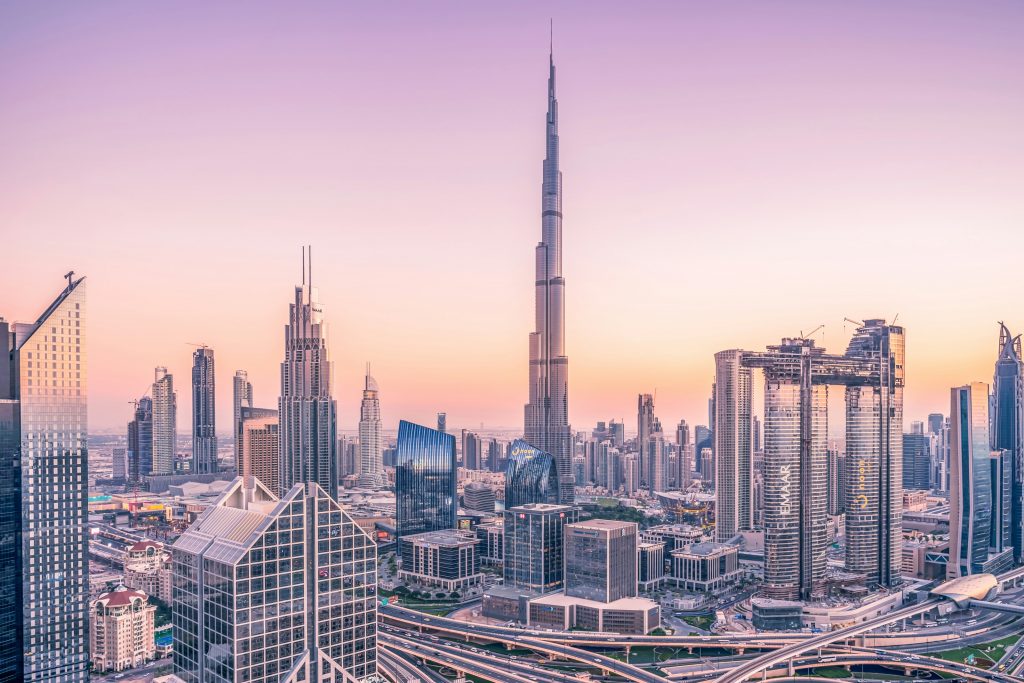
The United Arab Emirates (UAE) has established itself in recent decades as a key player both in the Middle East and in the international community. Founded in 1971 as a federation of seven emirates, the union has been marked by the leadership of Abu Dhabi and Dubai, whose political and economic weight has defined the national trajectory.3 . Since its founding, the UAE has sought to balance its integration into the international system with the preservation of each emirate's autonomy.
In foreign policy, the country has moved from a moderate profile, focused on Arab solidarity and support for regional causes like the Palestinian one, to a more assertive and global strategy. Following the leadership change in the 2000s, Abu Dhabi adopted a dominant role, driving a foreign policy that combines hard power—military intervention in Yemen, rivalry with Iran—and soft power—development aid, cultural diplomacy, and the projection of modernity.
Today, the UAE faces a turbulent regional environment, with growing tensions surrounding Israel and Palestine, rivalry with Iran, and the need to redefine its position in relation to powers like the United States, China, and Russia.4 . At the same time, economic diversification, investment in technology, and climate diplomacy are pillars of its future projection.
Between 2023 and 2025, the United Arab Emirates has consolidated its strategy of diversification and autonomy through high-profile economic and diplomatic initiatives. This includes trade agreements such as the signing of the Comprehensive Economic Partnership Agreement (CEPA) with Ukraine, opening new opportunities for investment and technological cooperation, as well as consolidating the country's international projection beyond the Gulf region.5 , and its role in the escalating tensions in the West Bank, underscoring its interest in regional stability and advocating for an emerging role as mediator. In parallel, investment in Africa has intensified, with projects in infrastructure, energy, and trade aimed at consolidating Emirati presence in strategic markets. This is a strategic and ambitious undertaking that has allowed it to anticipate social transformations and position itself as a significant player both regionally and internationally.
From Federation to Strategic Autonomy: 21st Century Shifts
The history of the UAE is marked by its colonial past and its geostrategic position in the Persian Gulf. After centuries of Portuguese and British influence, the withdrawal of the United Kingdom in 1971 opened the door to the formation of the federation. Although the original idea contemplated a broader union that included Qatar and Bahrain, they opted for the Gulf Cooperation Council (GCC), and the use of oil revenues to finance regional development projects. From its inception, the Federal Supreme Council reflected the tension between integration and autonomy. Abu Dhabi, thanks to its oil resources, and Dubai, due to its commercial dynamism, acquired a decisive weight. Sheikh Zayed, leader of Abu Dhabi and the country's first president, became the main architect of the initial foreign policy: support for the Palestinian cause, participation in the Arab League and the Gulf Cooperation Council (GCC), and the use of oil revenues to finance regional development projects.6.
The change in leadership at the beginning of the 21st century marked a turning point. Mohamed bin Zayed, the Crown Prince of Abu Dhabi, introduced a more assertive style, in contrast to his father's conciliatory diplomacy.7 . The September 11, 2001 attacks, in which Emirati citizens participated, strained relations with the United States but also opened the door for close counterterrorism cooperation. During the first decade of the 2000s, the perception of Iran as the main regional threat intensified. Dubai, historically closer to Tehran for commercial reasons, lost autonomy after the 2008 financial crisis, consolidating Abu Dhabi as the epicenter of political power.
In parallel, the federal government hardened its stance towards the Muslim Brotherhood and other Islamist movements, which were considered a risk both internally and externally. The outbreak of the Arab Spring in 2011 posed a direct challenge to regional stability. For the UAE, the revolts represented the threat of an Islamist surge. The country responded by supporting counter-revolutionary forces in Egypt and Libya, as well as strengthening its alliance with Saudi Arabia and participating in the military intervention in Yemen.8.
In parallel, Abu Dhabi intensified pressure on Qatar, which it accused of supporting the Muslim Brotherhood. This period consolidated the UAE's profile as a regional power willing to use military force to defend its vision of stability. In recent years, the UAE has sought to reduce its dependence on the United States, maintaining security cooperation while exploring new alliances with China, Russia, and emerging countries. The normalization of relations with Israel under the Abraham Accords (2020) was a turning point: projecting the UAE as a pioneer in a new regional paradigm, but also generating critical reactions throughout the MENA region.
At the same time, economic diversification is proving to be a strategic pillar. The financial, tourism, and technology sectors have gained prominence, while initiatives in clean energy and innovation projects aim to prepare the country for the needs of the post-oil era.9 . This stands in contrast to other models, like Saudi Arabia's. While Riyadh bases its power on religious legitimacy and Sunni hegemony, the UAE has opted for economic modernity, cultural diplomacy, and international mediation, building a more flexible and globally projected actor of strategic autonomy.
The United Arab Emirates has consolidated an active profile in international politics, combining economic leadership with mediation in global conflicts. In addition to its EPA with Ukraine, the country has promoted strategic investments in Africa, strengthening commercial and diplomatic alliances that expand its influence beyond the Gulf.10 . Technological innovation has become a central axis, with artificial intelligence projects applied to smart cities and public services, as well as pioneering investments in green hydrogen as part of the energy transition strategy.11 . A foreign policy perspective that integrates economic development, sustainability, and preventive diplomacy, positioning the UAE as a key player on the international stage.
On the other hand, Emirati diplomacy combines soft power with cultural and humanitarian projection. Examples include Expo Dubai 2020, sponsorship of global sporting events, and the use of development aid in third countries as a tool for influence.12.
However, this image of modernity coexists with criticism and questions regarding human rights, labor conditions for migrants, and internal political restrictions. This pursuit of legitimacy is one of the main dilemmas and tensions for Emirati foreign policy: how to balance the projection of a modern and innovative country with the limitations derived from its political and social system.
Conclusion
In conclusion, the foreign policy of the United Arab Emirates has shown a clear evolution since its founding in 1971: from a federal country focused on internal cohesion and Arab solidarity, with a conciliatory diplomatic profile under the leadership of Sheikh Zayed, towards an assertive regional actor under Abu Dhabi, capable of combining hard and soft power.13 . The intervention in Yemen, the rivalry with Iran, pressure on Islamist movements, and normalization with Israel through the Abraham Accords reflect how the UAE has consolidated its strategic autonomy in a complex geopolitical context. Looking ahead to the most recent developments (2023-2025), it positions itself as an actor with international and regional influence through an active role in mediating conflicts, especially in the Middle East, as well as through its investments and economic agreements.14 . But on the other hand, the coexistence of the modernization process with internal criticisms—issues such as labor rights, immigration, and political restrictions—remains a central challenge to its legitimacy and long-term sustainability.
quotes
3 Gutierrez Beaumont, J. (2022). An Approach to the Contemporary Foreign Policy of the United Arab Emirates (UAE).
Antwi-Boateng, O., & Alhashmi, A. A. (2022). The emergence of the United Arab Emirates as a global soft power: current strategies and future challenges. Economic and Political Studies, 10(2), 208-227.
6 Rugh, W. A. (1996). The foreign policy of the United Arab Emirates. The Middle East Journal, 57-70.
Ulrichsen, K. C. (2020). United Arab Emirates: Drivers and Coordinates of Foreign Policy. CIDOB International Yearbook, 239-247.
Gutierrez Beaumont, J. (2022). An Approach to the Contemporary Foreign Policy of the United Arab Emirates (UAE).
Mina, W. (2008). United Arab Emirates Trade Policy Review. World Economy, 31(11), 1443-1453.
12 Antwi-Boateng, O., & Alhashmi, A. A. (2022). The emergence of the United Arab Emirates as a global soft power: current strategies and future challenges. Economic and Political Studies, 10(2), 208-227.
13 Ulrichsen, K. C. (2020). United Arab Emirates: Drivers and Coordinates of Foreign Policy. CIDOB International Yearbook, 239-247.