The Kurdistan Region’s Conundrum: US Withdrawal, Security Vulnerability and Financial Dependence on Baghdad
Washington's military presence provided Erbil with security assistance, diplomatic support and an important counterweight to federal political pressure. Its departure has changed the strategic environment in which the KRG negotiates its relationship with Baghdad. The consequences are significant across three areas: the loss of American strategic support, increased security vulnerability and growing dependence on Baghdad for public finances. Together, they raise a fundamental question: can Kurdish autonomy remain meaningful when its financial and security foundations depend on the federal government?

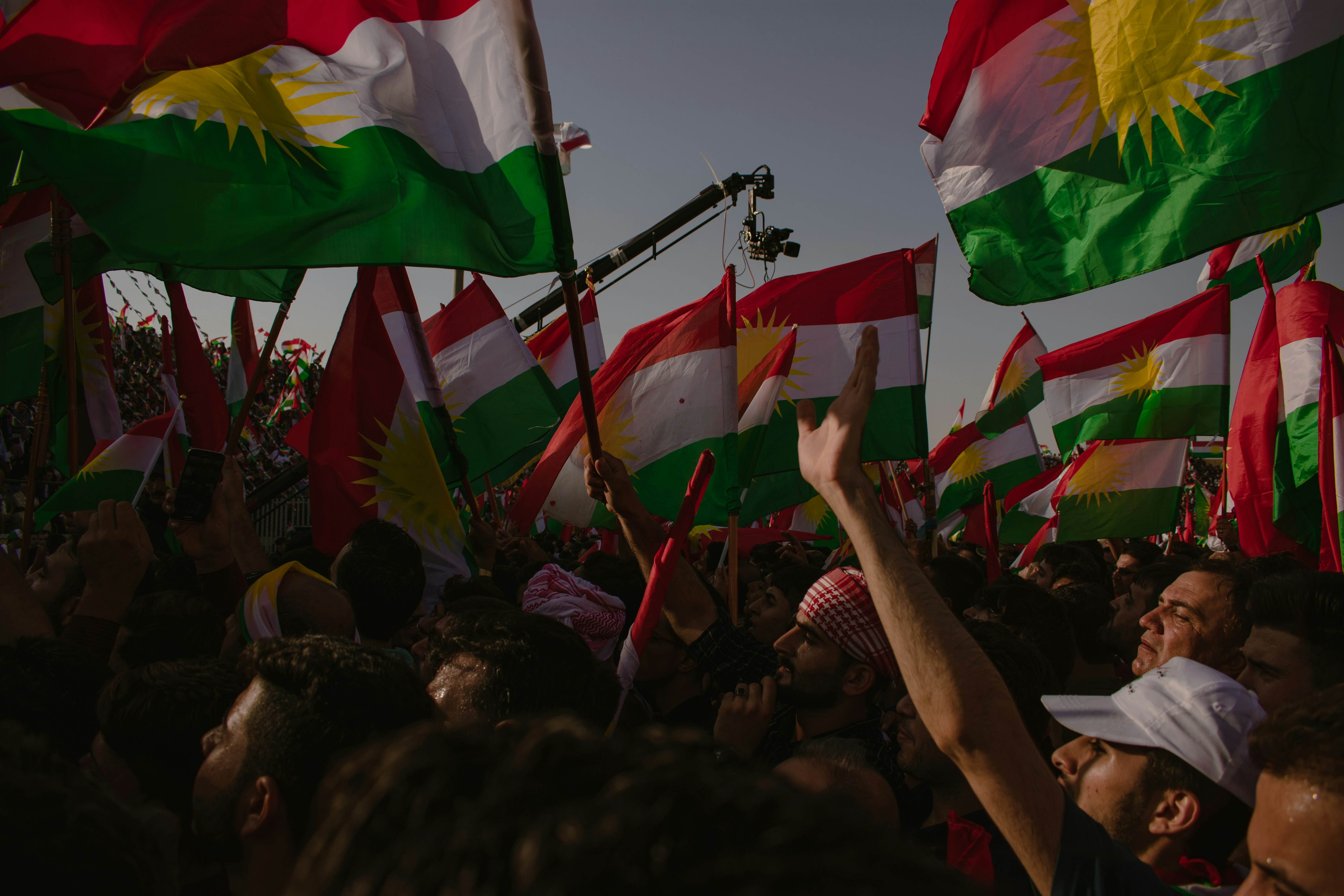
The departure of US forces has weakened Erbil’s strategic position, increased its security costs and deepened its dependence on Baghdad. The underlying fiscal contradiction threatens the financial and security foundations of Kurdish autonomy.
Executive Summary
The withdrawal of US-led coalition forces from Iraq on 30 September 2026 has intensified the Kurdistan Region's longstanding financial and political vulnerabilities. Although the departure marks an important milestone in restoring Iraqi sovereignty, it has altered the balance of power between the Kurdistan Regional Government (KRG) and Baghdad.
At the centre of the problem is a structural budgetary Catch-22: the KRG needs both independent oil and non-oil revenues and its allocated share of the federal budget to meet public expenditure. However, receiving federal funding requires transferring significant portions of its revenues to Baghdad, undermining the financial independence necessary to sustain regional autonomy.
The withdrawal has intensified this contradiction across four interconnected areas: the loss of American strategic support, growing security vulnerabilities, increasing dependence on Baghdad for public finances and renewed political divisions within the Kurdistan Region.
Together, these developments risk transforming Kurdish autonomy into an increasingly financially dependent administrative arrangement. Breaking this cycle requires predictable revenue-sharing, a federal oil and gas law and genuine institutional cooperation.
Introduction
The relationship between the Kurdistan Region of Iraq (KRI) and the federal government in Baghdad has long been characterised by tension between constitutional autonomy and financial dependence. Since Iraq's post-2003 political settlement, the Kurdistan Regional Government has sought to preserve its political and administrative autonomy, with financial self-sufficiency an essential requirement.
Yet the KRG's budgetary arrangements contain a structural contradiction.
As examined in research by Ahmed Tabaqchali for the London School of Economics Middle East Centre, the KRG requires two principal sources of income: independently generated oil and non-oil revenues and its allocated share of the federal budget. However, access to federal transfers is conditional on surrendering significant portions of its independent revenues to Baghdad, reducing the resources available to meet regional expenditure commitments.
The withdrawal of US-led coalition forces has intensified this predicament. Washington's military presence provided Erbil with security assistance, diplomatic support and an important counterweight to federal political pressure. Its departure has changed the strategic environment in which the KRG negotiates its relationship with Baghdad.
The consequences extend beyond security and finance to internal Kurdish political divisions. Together, these developments raise a fundamental question: can Kurdish autonomy remain meaningful when its financial and security foundations increasingly depend on Baghdad, while its own political leadership struggles to maintain unity?
Analysis
The United States: Losing the Strategic Hedge While Washington Retains Financial Leverage
For more than two decades, the United States played an important role in maintaining the political and economic balance between Baghdad and Erbil. Its involvement extended beyond military cooperation to diplomatic mediation and negotiations over oil exports and revenue sharing, including efforts to restore exports through the Iraq-Turkey Pipeline.
For the KRG, American involvement provided political insurance. Although Washington did not guarantee Kurdish financial independence, its diplomatic and military presence gave Erbil additional leverage in negotiations with Baghdad.
The withdrawal of American forces has weakened this position. Without the military presence underpinning much of the US-Kurdish security relationship, Erbil has lost an important strategic counterweight to federal authority. Baghdad consequently has greater room to pursue centralised control over oil production, revenue collection and federal budget allocations.
This weakening is compounded by renewed political divisions within the Kurdistan Region.
Disagreements between the Kurdistan Democratic Party (KDP) and the Patriotic Union of Kurdistan (PUK) over forming a new regional government have escalated, threatening the emergence of two rival administrations. The dispute intensified following a parliamentary session held in Erbil in early November without the PUK's participation. PUK leader Bafel Talabani subsequently withdrew his party from the government, raising the prospect of a rival administration emerging from its stronghold in Sulaimaniyah.
The dispute challenges the traditional power-sharing arrangement between the two dominant Kurdish parties and threatens the institutional unity necessary to negotiate effectively with Baghdad.
The divisions prompted Tom Barrack, the US special envoy for Iraq and Syria and speaking at a Chatham House conference in London, to urge the rival Kurdish parties to put aside their differences and move beyond their longstanding feud. His intervention signalled growing American impatience with Kurdish political fragmentation.
Responding, Talabani said he agreed, adding that the KRG needed to put its house in order. He also suggested that if the United States was unwilling to help resolve the dispute, it should observe developments from a distance.
Barrack's message reflects a broader shift in Washington's approach. Having reduced its military commitment, the United States increasingly expects Kurdish political leaders to resolve their internal differences and assume greater responsibility for regional stability.
However, this expectation comes at a difficult moment. Erbil is losing an external strategic counterweight while its own political leadership is becoming increasingly divided. Internal fragmentation therefore amplifies the consequences of American disengagement, potentially leaving Baghdad in a stronger negotiating position.
Washington nevertheless retains considerable influence over Baghdad.
Since 2003, Iraqi oil revenues have been held through the Central Bank of Iraq's account at the Federal Reserve Bank of New York. Given that oil accounts for approximately 90 per cent of Iraqi government revenues, this arrangement provides Washington with considerable indirect influence over Baghdad's financial stability and access to international dollar transactions.
This creates an important paradox: Washington has withdrawn its military presence but retains significant financial leverage over Baghdad. That leverage, however, does not automatically protect Kurdish fiscal autonomy.
For Erbil, the distinction is critical. The KRG can no longer rely on the same military and diplomatic arrangements to balance federal political pressure. Its relationship with Washington must increasingly depend on diplomatic engagement, economic cooperation and investment.
Security: Greater Vulnerability and an Additional Financial Burden
The second major consequence concerns the Kurdistan Region's security environment.
For years, American forces supported the Peshmerga, provided intelligence and military assistance, and helped protect the region against Islamic State and Iran-aligned armed groups. American air-defence capabilities, including Patriot and Counter-Rocket, Artillery and Mortar (C-RAM) systems around Erbil, also provided protection against missile and drone attacks. Their removal has significantly altered the security equation.
The Kurdistan Region has experienced repeated attacks against its territory, energy infrastructure and military installations. Since the escalation of the regional conflict in February 2026, more than 1,000 drone and missile attacks have reportedly targeted the region.
The vulnerability of critical infrastructure was demonstrated by a drone attack on the Khor Mor gasfield on 9 November 2026, which forced production to be suspended. The incident highlighted the exposure of the region's energy sector to escalating regional tensions and domestic political disagreements over bringing armed groups under state control.
Khor Mor is particularly important because of its contribution to domestic gas supplies and electricity generation. Disruptions therefore affect not only energy production but electricity provision, economic activity and the KRG's ability to sustain its energy infrastructure. Repeated attacks also undermine investor confidence and increase the risks associated with developing the region's energy resources.
The attack exposes a fundamental weakness in the KRG's security position. Despite its responsibility for protecting regional infrastructure, the KRG cannot independently provide the advanced air-defence capabilities required to counter persistent drone and missile threats. Meanwhile, Baghdad continues to face difficulties establishing effective control over powerful Iran-aligned armed groups and developing a comprehensive national air-defence system.
The American withdrawal may make Kurdistan less attractive as a target for groups seeking to confront Washington directly, but it does not eliminate the underlying threats. Iran-aligned militias retain their capabilities, regional rivalries remain unresolved and Kurdistan continues to occupy a strategically sensitive geographical position.
The KRG's internal political divisions further complicate the situation. Although the unification of the Peshmerga under a single command structure represents important progress, renewed confrontation between the KDP and PUK threatens to undermine security cooperation. A unified military command requires sustained political commitment from both parties.
Airspace defence is fundamentally a federal responsibility. The KRG must increasingly depend on Baghdad to protect its territory against aerial threats, creating an additional contradiction: Kurdistan needs greater security assistance from the federal government while its political and financial relationship with Baghdad remains deeply contested.
The KRG also faces growing expenditure requirements for defence, military infrastructure, intelligence and security capabilities, despite diminishing international assistance and limited independent revenues.
If federal authority is used to strengthen national security institutions and protect all Iraqi territory, the outcome could be greater integration and stability. If exercised coercively, however, it risks deepening Kurdish grievances. Iraqi sovereignty must ultimately be demonstrated through the state's capacity to protect its citizens and territory, not simply through the departure of foreign forces.
Public Finance: The Growing Dependence on Baghdad
The third and arguably most consequential impact concerns the KRG's public finances.
The region's financial vulnerability predates the American withdrawal. Its underlying problem is the contradiction between the revenues required to sustain Kurdish autonomy and the conditions imposed by Baghdad for receiving federal budget allocations.
Independent income provides flexibility to finance government institutions, public services, infrastructure and security, while federal funding is essential to meet expenditure commitments that exceed what the region's own revenues can reliably sustain. However, access to federal funding requires transferring agreed oil production and non-oil revenues to Baghdad. The more revenue Erbil surrenders to secure federal allocations, the less independent income remains available to meet its obligations.
Legal disputes, pipeline interruptions and disagreements over the authority to market Kurdish crude have compounded the problem. Although the resumption of exports through the Iraq-Turkey Pipeline offered an opportunity to restore revenue generation, it did not resolve the underlying dispute over control and distribution of the proceeds.
The Khor Mor attack adds another dimension to this financial vulnerability. The suspension of production demonstrates how security disruptions can directly undermine domestic energy supplies, electricity generation and the broader economic environment. The KRG needs reliable energy production and exports to generate independent revenues, but persistent security threats make its infrastructure increasingly vulnerable.
Consequently, the region risks becoming more dependent on federal transfers precisely when its capacity to generate independent income is being undermined by political disputes and attacks on critical infrastructure.
The consequences are particularly visible in public-sector salaries. Baghdad has increasingly prioritised funding basic civil-servant payroll obligations while restricting or delaying other components of the regional budget, including operational and investment expenditure.
The federal Tawtin electronic salary localisation system illustrates this shift. Although it may improve transparency and financial accountability, it also increases federal oversight of the mechanisms through which Kurdish public employees receive their wages.
For the KRG, ensuring regular salary payments has become an overriding priority. However, a government unable to reliably finance its administration, infrastructure, investment programmes and security institutions faces significant limitations on its ability to exercise meaningful political autonomy.
Federal transfers that cover basic salaries cannot provide a sustainable foundation for regional development. The KRG must also finance healthcare, education, electricity, water, infrastructure and pensions.
Without sufficient independent revenues, the region risks becoming increasingly dependent on Baghdad, with its government reduced to distributing federal funds rather than determining its own economic priorities. The Catch-22 therefore threatens not only economic development but the institutional foundations of Kurdish self-government.
Overcoming the Impasse: Federal Integration Rather Than Financial Isolation
The interaction between these developments creates an increasingly difficult strategic environment for the Kurdistan Region. The withdrawal of American forces has weakened Erbil's external political and security support, while increased security requirements have added to expenditure pressures. Renewed divisions between the KDP and PUK undermine political cohesion, while attacks on critical energy infrastructure threaten independent revenue generation.
Escaping this dilemma does not necessarily require greater economic separation from Iraq. As Tabaqchali's research suggests, the long-term solution lies in strengthening the federal framework rather than pursuing financial independence outside it.
A sustainable settlement requires a shared understanding between Baghdad and Erbil of how Iraq's federal system should operate. At its centre must be a comprehensive federal oil and gas law, supported by institutions capable of regulating production, exports, revenue collection and distribution.
Such a framework would establish predictable rules governing federal and regional responsibilities, reduce dependence on temporary political agreements and provide international oil companies with greater legal certainty. Most importantly, it could ensure that the Kurdistan Region receives its constitutionally recognised financial entitlements while meeting clearly defined obligations concerning its own revenues.
The same principle should apply to security. Baghdad must recognise that its responsibility for Iraqi sovereignty includes protecting the Kurdistan Region and its strategic energy infrastructure, while the KRG must continue integrating its security institutions within a functioning federal framework.
Equally important is restoring political cooperation between the KDP and PUK. Without an effective power-sharing arrangement and a functioning regional government, the KRG risks losing the institutional cohesion required to negotiate with Baghdad and manage its security responsibilities. Barrack's intervention highlights Washington's expectation that Kurdish leaders resolve these divisions themselves.
The objective should be to make federal cooperation sufficiently effective and predictable to protect regional autonomy, rather than subordinate it.
Conclusion
The US withdrawal has not created the Kurdistan Region's financial Catch-22, but it has significantly intensified its consequences. Erbil has lost an important strategic counterweight to Baghdad, faces additional security vulnerabilities and has become increasingly dependent on federal transfers to sustain its public administration.
These developments are compounded by renewed political divisions between the KDP and PUK, threatening the unity of the regional government and weakening its ability to respond collectively to external pressures.
The Khor Mor attack illustrates another critical dimension: the vulnerability of the energy infrastructure on which Kurdish economic independence depends. The KRG needs greater financial resources to protect its territory, secure critical infrastructure and maintain its institutions, yet its ability to retain independent revenues is constrained by the conditions attached to federal funding. Security disruptions further undermine the energy revenues needed to sustain autonomy.
The developments reinforce one another. Political fragmentation weakens regional governance, security vulnerabilities threaten economic infrastructure, and financial dependence limits the KRG's ability to address either challenge independently.
The danger is that Kurdish autonomy becomes increasingly administrative rather than substantive, with the region dependent on Baghdad for both public finances and essential security capabilities. For Baghdad, using federal financial and security authority to subordinate the Kurdistan Region may produce short-term political compliance, but risks undermining the federal compact on which Iraq's constitutional structure depends.
Ultimately, resolving the predicament requires a reset of relations between Baghdad and Erbil, based on predictable revenue-sharing, a federal oil and gas law, institutional cooperation and a credible commitment to shared security. It also requires the KDP and PUK to overcome their differences and restore a functioning regional government.
The challenge is to transform federal integration from an instrument of financial dependency into a mechanism for protecting Kurdish autonomy. Failure to do so could turn the KRG's fiscal Catch-22 into a mechanism of political subordination, hollowing out regional self-government, deepening Kurdish grievances and increasing the risk of renewed confrontation with Baghdad.