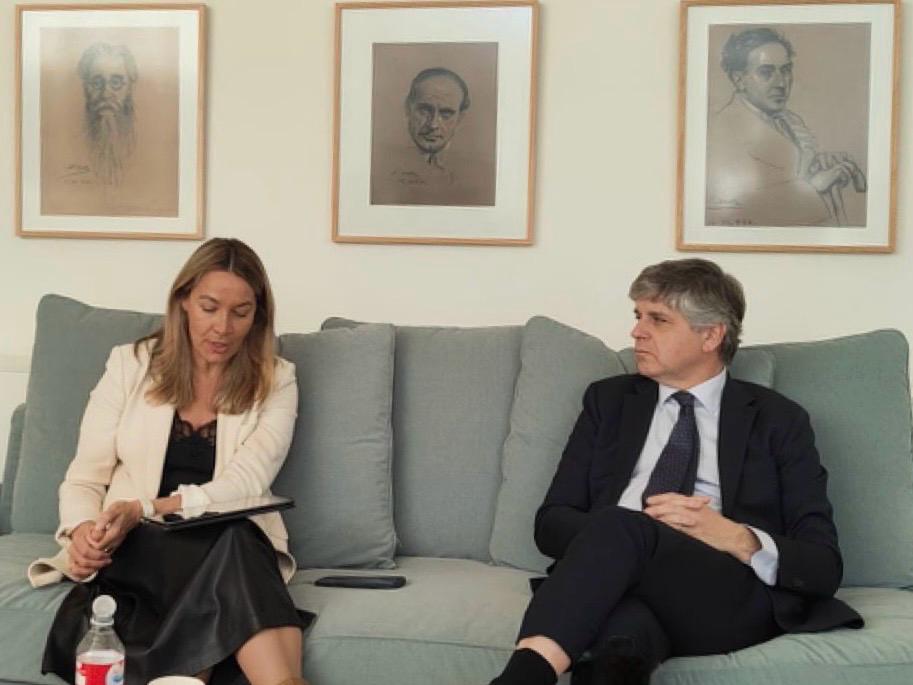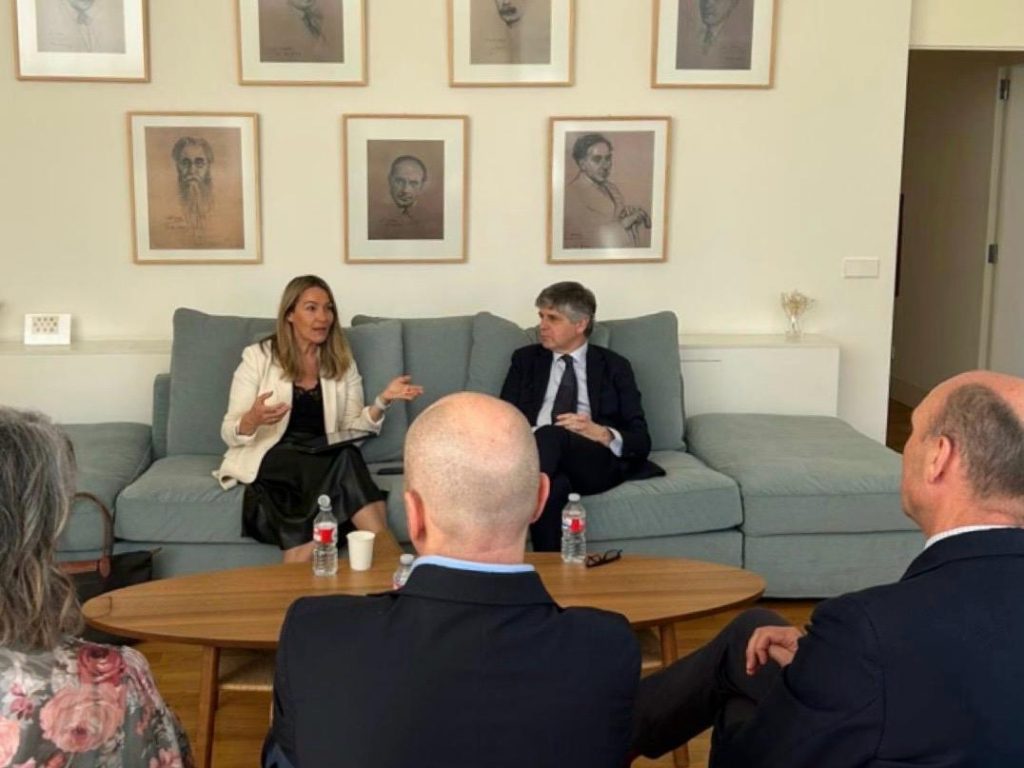

Last Thursday, February 27, Centinelas celebrated the event Where is Europe going?, at the Ortega y Gasset Foundation, conceived as a space for reflection and dialogue on the great challenges facing the European continent at the present time.
On this occasion, the meeting was attended by Susana Solís Pérez, a Member of the European Parliament for the European People's Party, who gave a speech focused on the analysis of Europe's structural weaknesses and the reforms undertaken to address them.
During the conversation, fundamental issues concerning the continent's energy situation were addressed. It became clear that energy has become a geopolitical tool, in a context where electricity grids are at their operational limits. Added to this is the progressive deterioration of European competitiveness, attributed both to the absence of strategic technologies and to structural flaws in the energy sector, circumstances that compromise the sustainability of the welfare state model.
Likewise, the pace of institutional change in Europe was reflected upon. While there is a willingness to reform, progress is made over time and without the ambition required by the magnitude of the challenges. Political polarization and the rise of populism hinder the formation of the necessary majorities, making it essential to address each matter individually. In this context, reference was made to the simplification agenda and the approval of an industrial acceleration law, aimed at removing bureaucratic obstacles and strengthening European competitiveness, in parallel with the commitment to decarbonization and the transition towards energy neutrality.
The analysis of Europe's foreign relations also occupied a prominent place in the debate. Regarding the transatlantic relationship, it was emphasized that the bond with the United States transcends mere circumstantial cooperation, constituting a strategic axis on which Europe must continue to build firmly, both commercially and diplomatically. As for China, the discussion was more complex: far from proposing a break or a full partnership, the need for an active risk management policy was defended, one that acknowledges the interests at stake without renouncing fundamental principles.
Taken together, the meeting proved to be of great value, offering attendees a well-founded, first-class insight into the direction Europe faces at a time of profound international transformation.